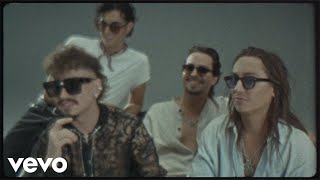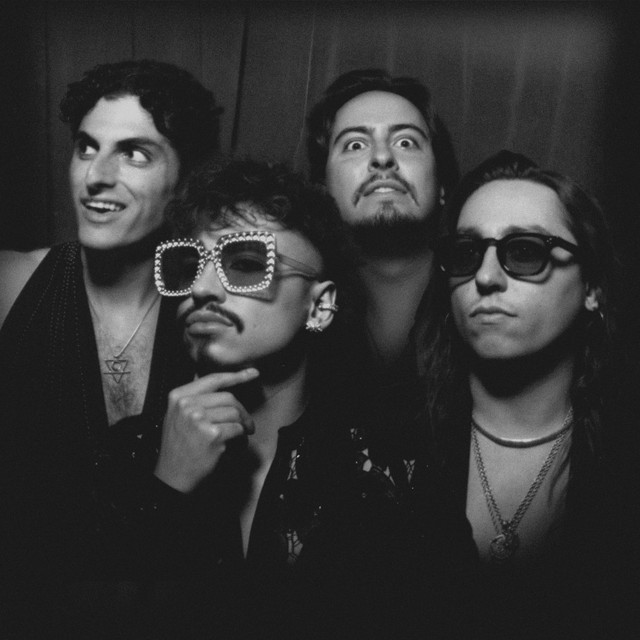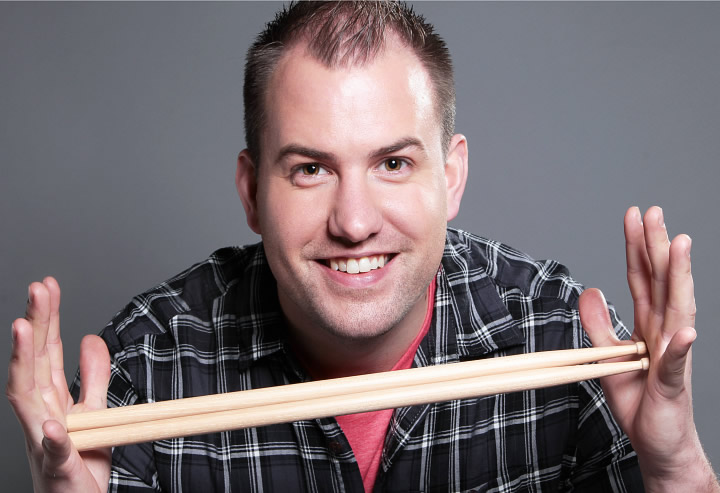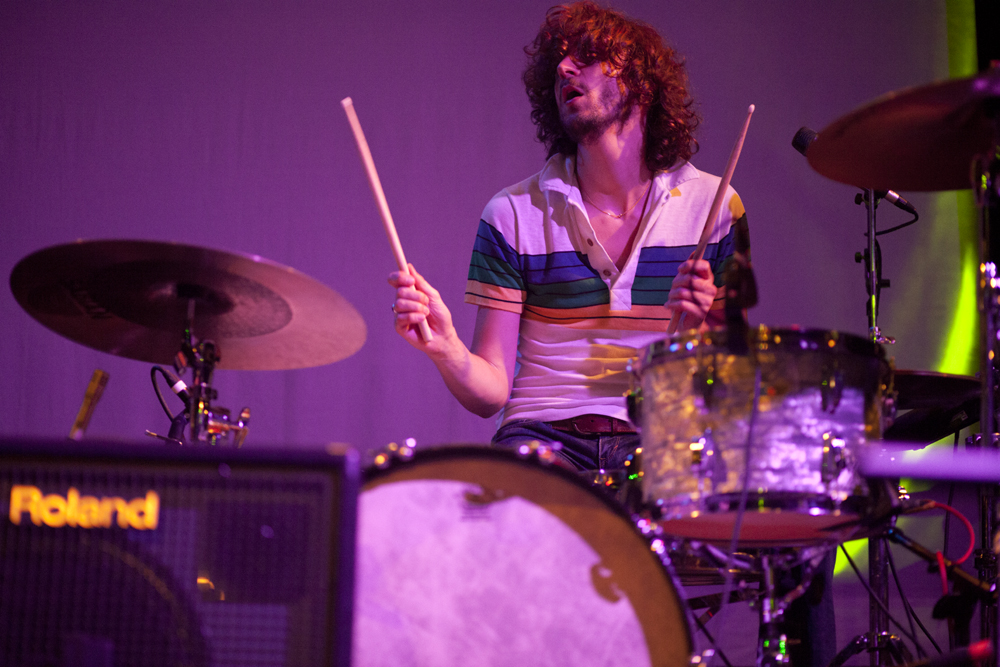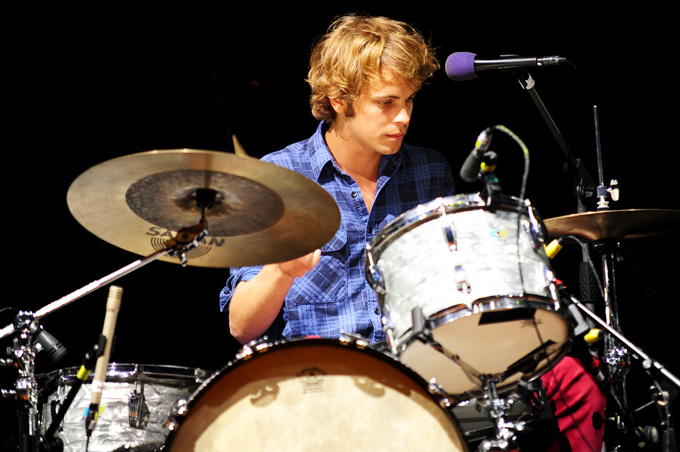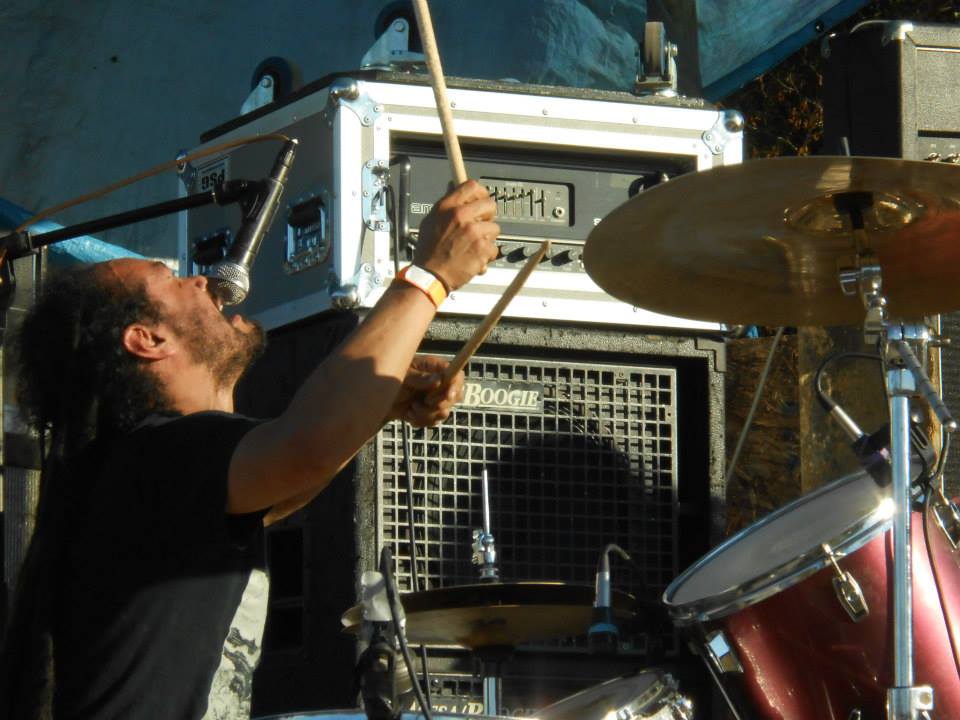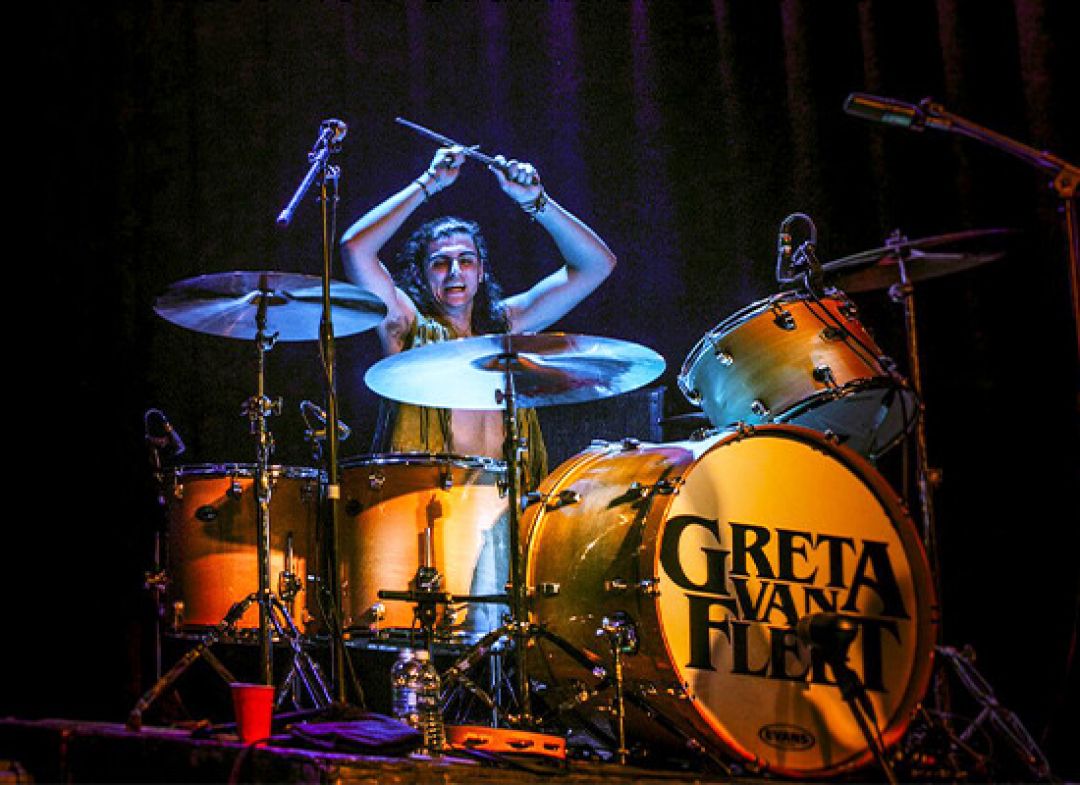





Greta Van Fleet is four young musicians - twin brothers Josh (vocals) and Jake Kiszka (guitar), younger brother Sam (bass/keys), and longtime family friend Danny Wagner (drums).
Danny Wagner became the last piece of the Greta Van Fleet puzzle, joining a year after the group started, after being a regular at the Kiszka house for jams and rehearsals. “We all have similar taste in music and that helps a lot,” Wagner notes. “But at the same time we have these little differences in what we like, and when it comes together it produces this sound. It’s got that classic kind of vibe but it has a lot of soul, a lot of energy, and that’s a huge part of it.”
Born with a passion for music and a relentless drive to improve, Danny Wagner has become one of modern rock’s most exciting young drummers through dedication, versatility, and a deep respect for musical tradition. Best known as the drummer for Greta Van Fleet, Wagner’s musical journey began not behind a drumkit, but with the guitar.
As a child, Wagner initially took guitar lessons, but quickly grew frustrated with the structure and routine of formal instruction. Determined to learn on his own terms, he began teaching himself instruments independently, eventually discovering that drums were the instrument he connected with most naturally. His first experiences playing with others came in middle school when he joined the school band, where he learned one of the most important lessons of being a musician: how to become part of a collective sound rather than simply playing alone.
In high school, Wagner expanded his musical abilities even further. Although he originally hoped to join the jazz band as a drummer, the drum positions were already filled, forcing him back to the guitar. The experience reignited his love for the instrument and opened the door to exploring multiple musical styles. Over time, he added French horn, piano, mandolin, and bass to his growing list of instruments, developing a broad understanding of melody and harmony that would later shape his songwriting and drumming style.
Despite his natural talent, Wagner has spoken openly about struggling with rhythm and timing early in his development as a drummer. Determined to improve, he immersed himself in rigorous practice routines, spending hours working with metronomes and isolating each limb individually to sharpen his precision and control. He views music as a collection of “muscles” that require constant training, believing that rhythm, pitch recognition, and musical instinct all demand continual maintenance and growth.
That philosophy carried into his role with Greta Van Fleet, where the band’s songwriting process remains highly collaborative and organic. Rather than following a strict formula, ideas can come from any member, with songs evolving naturally through acoustic rehearsals and collective experimentation. Wagner’s knowledge of multiple instruments gives him a unique perspective within the group, allowing him to contribute ideas beyond percussion and better understand the emotional and harmonic direction of each song. He has often noted that while drums may not always define a song, they can easily ruin one if approached incorrectly.
Wagner’s playing style reflects the influence of legendary rock drummers including John Bonham, Alex Van Halen, Keith Moon, and Ringo Starr. Bonham’s evolution and musical openness particularly inspired Wagner, while Starr’s experience joining an already close-knit band resonated deeply with him when he entered Greta Van Fleet alongside brothers Josh, Jake, and Sam Kiszka. Initially feeling like an outsider, Wagner constantly pushed himself to prove his worth, eventually realizing that he had become an essential part of the band’s identity.
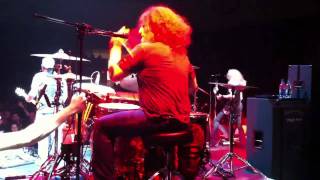
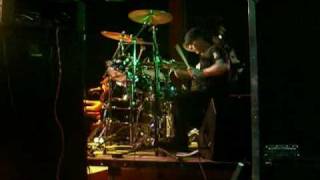
Offstage, Wagner is equally meticulous about his craft. He personally sets up and tears down his drumkit every night, using the same configuration consistently so he can perform almost entirely through muscle memory. His preferred setup centers around a cherished Ludwig kit he purchased himself after saving money from odd jobs, paired with Paiste cymbals that complement the sound he seeks onstage and in the studio.
Like many live performers, Wagner found the transition to studio recording challenging at first. Greta Van Fleet built its reputation through live performances long before entering a recording studio, and Wagner initially struggled to recreate the same energy under studio pressure. Working with veteran producer Al Sutton helped the band understand the difference between live performance and recording, teaching them how to channel spontaneity and emotion into studio sessions.
Throughout his career, Wagner has embraced the belief that musicians should never stop learning. Whether studying rhythm, exploring new instruments, or refining his live performances, he approaches music as a lifelong pursuit of growth and discovery. That commitment to evolution continues to shape both his playing and Greta Van Fleet’s sound as the band carries classic rock influences into a new generation.
YouTube




 Gareth Burnett