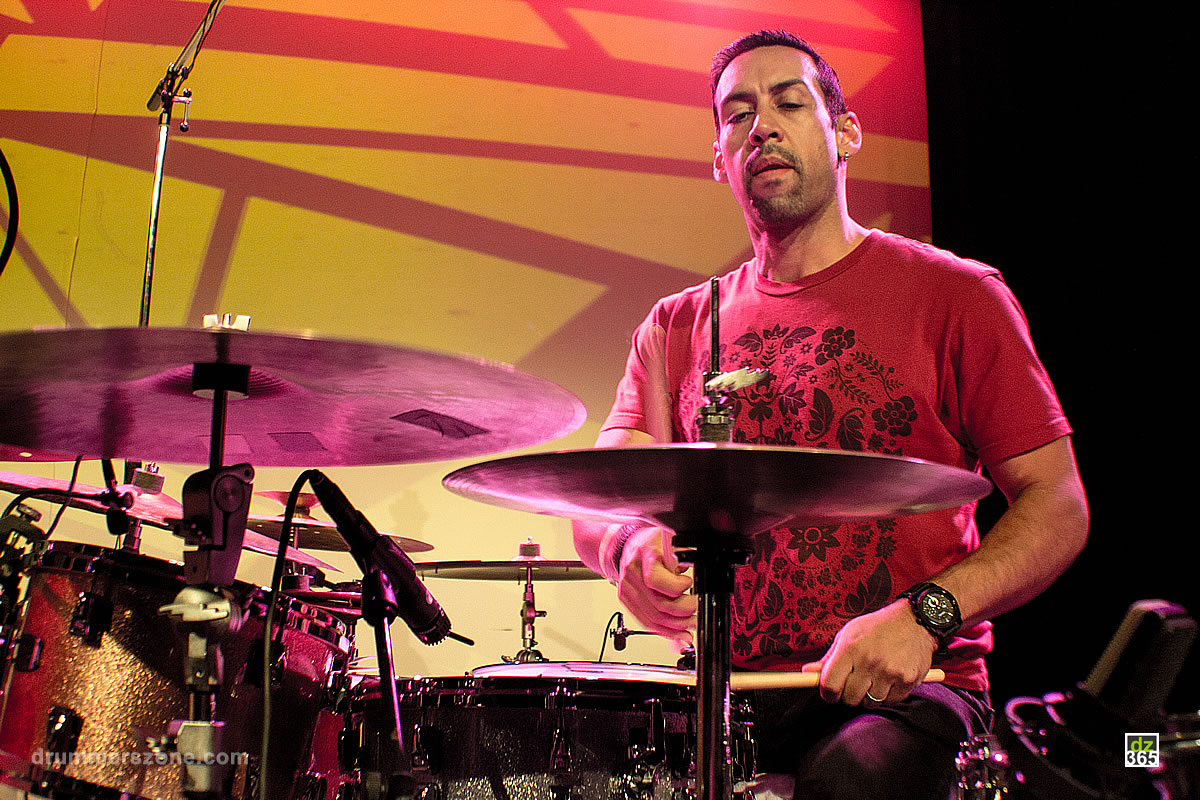
Drumset wizard Antonio Sánchez, from Mexico City, Mexico, boasts a c.v. including his solo soundtrack for Alejandro Iñárritu’s film Birdman, 22 years with guitarist
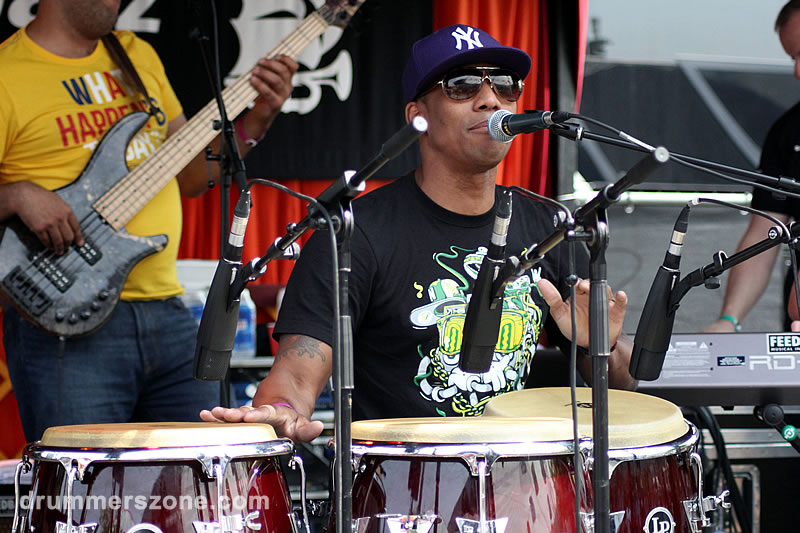
The brilliant conguero-vocalist Pedro Martinez, from Havana, Cuba, a repository of the numerous chants and rhythms from West African religious systems that survived the horrors of the Middle Passage and enslavement, is unparalleled in his ability to transmute these raw materials into the ecosystems of contemporary Cuban dance music and cutting-edge 21st century jazz.
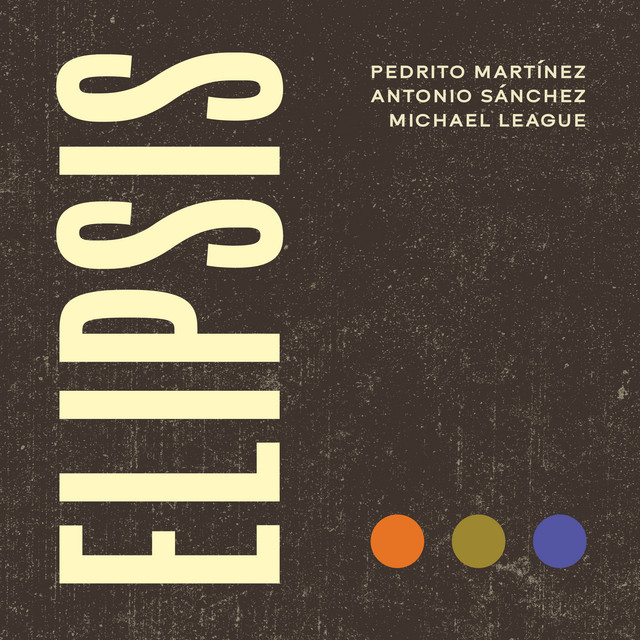
“An ellipsis is three dots (...); there’s three of us,” League says, unpacking the album title. “Also an ellipsis is a grammatical device to signify a continuation of something that’s unknown. Suppose you say, “You could come over and...” – you don’t know what will happen, but you do know it’s a continuation of something. The whole idea behind this band is taking a firmly established musical tradition with deep roots, and trying to continue that tradition in a new and unknown way.”
Elipsis gestated in the late 2010s in New York, where each musician then lived, after Martinez and Sánchez separately suggested to League that they collaborate on a project. They began to convene and morph ideas during periodic encounters at League’s studio, eventually performing an ebullient improvised trio concert at the 2018 North Sea Jazz Festival, where League was artist-in-residence. In 2021, the drummers spent two days improvising at Manhattan’s Power Station Studio as League – ensconced in the top-floor studio he’d built in the centuries-old house in the Catalonian village he’d moved to in 2020 – observed the proceedings on Zoom. As Martinez and Sánchez sent chunks of their drum conversation, League edited and orchestrated the passages.
“Then Pedrito would sing some folkloric Yoruba songs, or improvise, or both – and we’d record that,” League says. “So we had just drums, percussion and singing – and maybe a bassline, maybe a chord. The next step was to create songs around the improvisations. We approached the recording process in reverse. The composition was the last thing to happen.”
“It was a great experience to jam in the studio and be able to make our own shapes and forms in the moment,” Sánchez says. “I tried to start from what Pedrito was doing and fill in the gaps, so to speak. Watching Pedrito do the voices in the studio was incredible. He’d improvise a full verse as the lead voice, ask the engineer to play it back, and then record another improvisation, one after the other, until he’d layered this incredible chorale of five Pedros doing different things – on the spot.
“As a singer, I see percussion as a melody instrument,” Martinez says. “Both Mike and Antonio responded to my melodies and chants, and were constantly aware of dynamics, so it sounded musical. We don’t sound like two percussion players just jamming, trying to see who has more chops than the other. It was very organic and natural.
“Sometimes people don’t want to mix one tradition with another – say, the Bantu ethnic group with the Yoruba, or the Yorubas with people from the Calabar. But I was getting all those ideas at the same time, and I wanted to be free to mix them. I sang chants and things that I knew when I was little. This is an oral tradition that one generation passes to the other. A lot of the things I sing, I learned when I was 13. I still cannot tell you word-by-word what they all mean.”
“My mission with each song was to allow these largely improvised lyrics to be easily understood, and also create textures you’ve never heard under Yoruba or Cuban styles,” League says. “Every modern Cuban musician you know who came up with a folkloric background is well aware of Cuban rumba, the Yoruban tradition, the salsa tradition, and groups like Los Van Van. Everything is mixing at this point.”
“We all emigrated to New York years ago – Pedrito from Cuba, me from Mexico, Mike from California via Texas – because New York gives you the most diversity, the most freedom to do crazy things,” Sánchez says. “It generates the type of art that only happens when people come together from completely different walks of life and different cultural traditions. This album absolutely represents that – a very pure form completely transformed by other influences. Pedro was born with the folklore that’s at the root of this project. I didn’t learn it until way later in life, nor did Mike, but we put our sensibility into the music. It became something bigger than the sum of its parts.”
“I grew up being told the United States is about strength in diversity,” League states. “Here are three people from three different countries, all on the same continent, with very different musical and cultural traditions, coming together to try to combine the best of what we each have.”
Martinez concludes: “I contributed these Yoruba chants, Mike created the beautiful harmonies and chords and ideas and melodies, and Antonio came up with great drum patterns from different parts of the world. We needed to send a message about uniting cultures and musical genres. As artists and musicians, we want people to feel they’re in the United States of America, not the Divided States of America.”